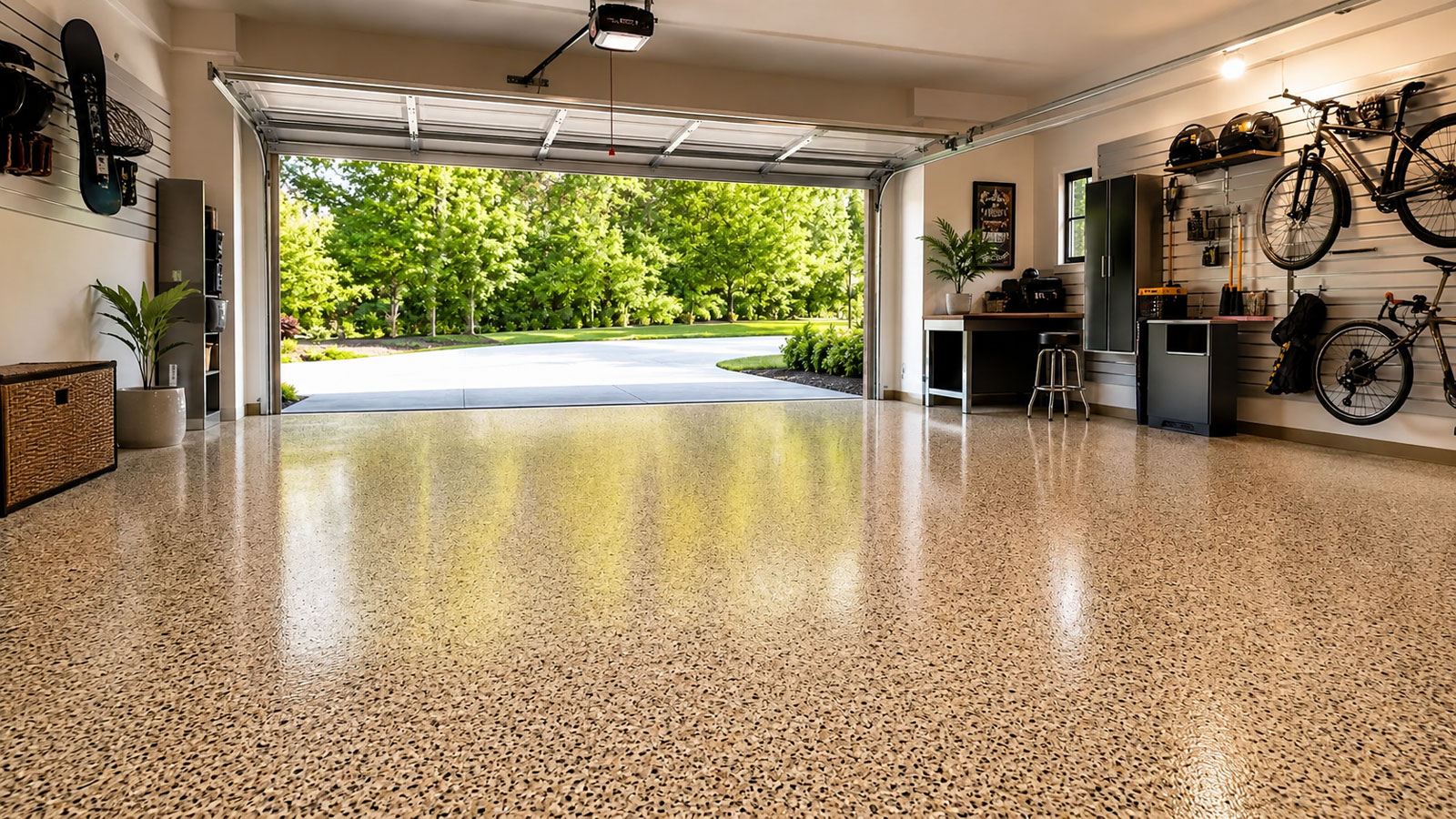
Caring for Your Garage Floor Coating
A professionally installed floor coating is designed to be low-maintenance and long-lasting. Here’s how to keep it clean, protected, and looking great for years.
The Good News: It's Easy
One of the main reasons homeowners invest in a professional garage floor coating is the reduction in maintenance. Bare concrete can absorb oil, moisture, dirt, and stains, making it harder to keep clean over time. A professionally coated floor creates a protective surface that is much easier to sweep, mop, and maintain.
The most important maintenance principle is simple: keep the floor clean. Regular sweeping helps remove grit that can dull the finish, and prompt cleanup of spills helps protect the coating from unnecessary wear. For most homes, basic cleaning with water, mild detergent, and a soft mop or brush is enough.
The main thing to avoid is harsh or abrasive cleaning. Strong acids, bleach, aggressive degreasers, wire brushes, and abrasive pads may dull or damage the finish. Below is a simple guide to what works well and what to avoid.
Routine Maintenance Tasks
Sweep or dust mop
Remove loose dirt, dust, leaves, and grit with a soft-bristle broom or microfiber dust mop. This helps prevent abrasive particles from being ground into the surface by foot traffic, vehicle tires, or stored items.
Damp mop with mild cleaner
For a deeper clean, mop with warm water and a mild floor cleaner. Avoid harsh chemicals, acidic cleaners, bleach, ammonia, wire brushes, and abrasive pads, which may dull or damage the finish.
Clean up spills
Wipe up oil, gasoline, brake fluid, road salt, and other automotive or household spills as soon as practical. Professional coatings are designed to handle normal garage use, but prolonged exposure to harsh substances can affect the finish.
Rinse away salt, sand, and grit
In winter or after heavy use, clean the floor to remove road salt, sand, mud, and grit. These materials can be abrasive if left on the surface for long periods.
Check for chips or wear
Occasionally look for chips, scratches, dull areas, or unusual wear. Minor issues can often be addressed more easily when they are noticed early.
What to Avoid
A professionally coated garage floor is durable, but harsh chemicals, abrasive tools, and prolonged exposure to certain materials can dull or damage the finish over time. In most cases, a mild cleaner, water, and a soft mop or brush are enough.
South Bend and Michiana Considerations
Lake Michigan-influenced winters create a few practical maintenance considerations for South Bend and the wider Michiana service area.
Lake-Effect Snow and Meltwater
Lake Michigan influences South Bend’s climate, and lake-effect snow can make winter garage use especially wet. Let snowmelt drain or dry as practical, then sweep or mop the floor so grit is not repeatedly worked into the finish.
Salt, Brine, and Deicing Residue
Winter road treatment can leave salty slush and deicing residue on tires and footwear. Prompt removal with water and a mild cleaner is a sensible way to keep coated garage floors easier to maintain.
Winter Wet/Dry Cycles
Repeated wet and dry conditions make routine cleanup useful. A coating can improve cleanability, but it does not replace proper evaluation of existing cracks, slab movement, or moisture concerns.
Tracked-In Grit
Snow-season grit, sand, and ordinary road debris can be abrasive when left under tires or foot traffic. Regular sweeping helps preserve the appearance of the finished surface.
Recommended Cleaning Approach
Related Guides
Questions About Your Garage Floor?
Call to talk through maintenance, repairs, recoating options, or next steps for your garage floor.