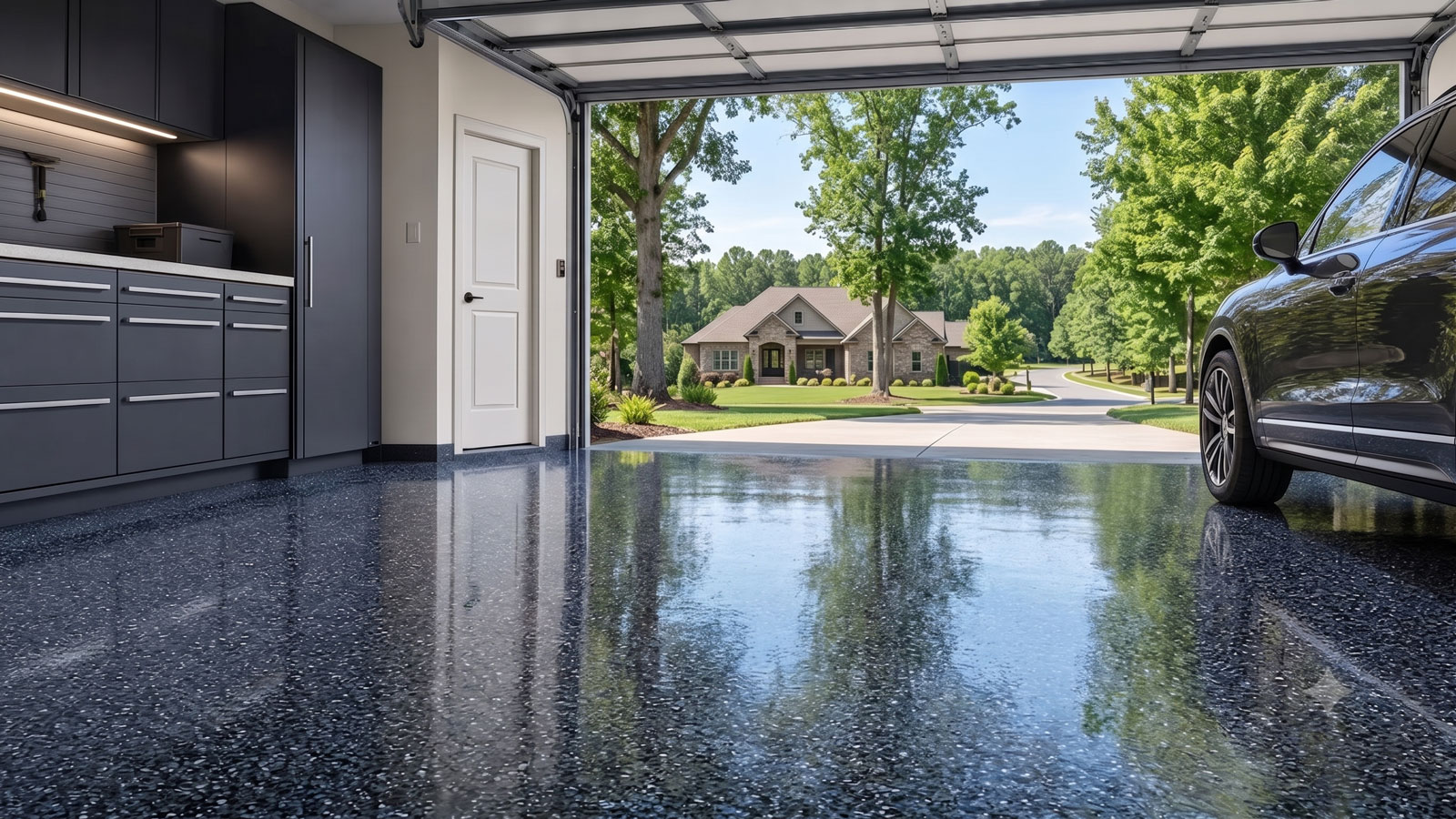
Garage Floor Coating in Mishawaka, IN
Floor Coating Services in Mishawaka, IN
Mishawaka's Engineering Department administers an MS4 stormwater program and explains that runoff entering street inlets generally flows to local streams without treatment. The city posted identification signs at major waterway crossings and coordinates its MS4 permit with Bethel University. Those practices describe public water protection, not the moisture content of any individual garage slab.
The St. Joseph River travels more than 200 miles through northern Indiana and southern Michigan, while nearby South Bend's annual snowfall normal is about 64.5 inches. That winter climate makes road grit and snowmelt relevant to garage maintenance, but proximity to the river does not prove flooding. Observe whether water follows a wet vehicle, crosses a driveway threshold during rain, or persists when cars are absent.
A Mishawaka garage used for vehicles, storage and household entry needs inspection of existing paint, sealer, repairs and working joints before coating selection. Ask how grinding will establish the correct surface profile, what finish texture fits wet-shoe traffic, and when cars may safely return. Public stormwater responsibilities do not substitute for private concrete assessment.
Local Market Insight
Mishawaka's city MS4 program, shared permit with Bethel University, and identification signs at river and stream crossings are distinct local water-quality initiatives. The St. Joseph River exceeds 200 miles in length. These details justify checking runoff, but none establishes a private slab's moisture.
What Affects the Cost of Garage Floor Coating in Mishawaka?
For Mishawaka, the actual concrete controls coating cost. Mishawaka administers an MS4 stormwater pollution program. That public or geographic fact is context, not evidence of a damaged garage. A quote should identify old sealer, stains, repairs, joints and the specific preparation required.
Project access and finish also change price. Cabinets, steps and storage must be considered alongside flake texture, material layers and a realistic return-to-parking schedule. A written estimate should separate repairs from optional decorative upgrades.
- Prior floor treatments: Paint, sealer, epoxy, curing compounds and old patches may require removal or grinding. A home's age does not reliably establish the age of its garage slab.
- Mishawaka's MS4 partnership: Mishawaka shares MS4 responsibility with Bethel University and uses signs at major waterway crossings. These practices concern public runoff; they do not imply that a garage near a river needs waterproofing.
- Unfiltered street runoff: The city explains that storm-drain inlets convey untreated surface runoff toward streams. At a home, examine driveway grade and observed water entry separately from public inlets.
- Concrete repair: Movement joints, cracks, pitting and old repairs affect labor. A decorative coating cannot halt slab movement, and repair methods should be appropriate to the observed issue.
- Work-area access: Steps, cabinets, drains and bulky stored belongings make perimeter preparation more complex. Ask what must move so grinding and coating can reach every intended area.
- Topcoat and cure time: Decorative flake density, texture and cure needs change the schedule and materials. Clarify slip resistance, maintenance and when tires can safely return under product instructions.
Call for a clear, project-specific estimate — or request one online.
Mishawaka's River Crossings and Winter Garage Residue
Mishawaka has posted waterway-identification signs near major river and stream crossings as part of its stormwater outreach. The city explains that street-inlet runoff can reach the St. Joseph River and its tributaries without conventional treatment. Those facts make rainwater quality a genuine public concern, but do not establish any home's garage-floor moisture condition.
The St. Joseph River extends more than 200 miles through northern Indiana and southern Michigan. Nearby South Bend's normal annual snowfall is about 64.5 inches. In a Mishawaka garage, winter vehicle use may leave slush, grit and residues under tire tracks; the river's length or the local snow normal cannot tell an installer whether a particular slab contains contamination.
Look for patterns instead. Water arriving under a car after winter travel may need routine cleanup and appropriate floor texture. Runoff that crosses a driveway apron and door threshold needs separate evaluation. Dampness with the garage empty can warrant a substrate moisture check before a coating is selected.
A coating can make sound, properly prepared concrete easier to clean, but it will not stop a leak or stabilize active cracks. Ask how existing paint, oil contamination, patch material and previous epoxy will be dealt with, and what grinding process will create the correct profile.
Mishawaka's MS4 Program Versus Residential Concrete
Mishawaka administers an MS4 stormwater program as a co-permittee with Bethel University. The program addresses erosion controls, pollution prevention and public runoff; it does not specify resin systems for private garages. Homeowners should keep the public responsibility separate from a contractor's task of assessing the private slab.
An existing garage may have been added or repoured after the surrounding home was built. A professional estimate should identify patches, movement joints, spalling, old coatings and how the floor is used. Where cars share the space with shelves or sports equipment, all perimeter edges need access for mechanical preparation.
Compare epoxy and polyaspartic as full systems rather than product labels. Discuss a textured flake surface for wet entry, cleaning guidance for road grit, realistic cure conditions and temporary parking. A well-written quote explains the relationship between observed substrate defects and the actual repair scope.
- Identify any existing paint, sealer or epoxy.
- Inspect cracks and movement joints.
- Check rainfall entry at the garage door.
- Observe actual winter tire residue.
- Provide space for grinding around storage.
- Confirm topcoat texture and vehicle-return time.
Frequently Asked Questions
Does living near the St. Joseph River mean my garage is wet?
No. The St. Joseph River runs over 200 miles through northern Indiana and Michigan, but a property's drainage depends on its own grade and construction. Inspect actual dampness and door leakage before considering repairs.
Can an existing Mishawaka garage be coated?
Often, if the concrete is sound and suitable for resin after preparation. Old coatings, stains, patches and moisture concerns should be inspected. House age alone is not a useful suitability test.
What if water comes in through the garage door?
Check the door seal, gutters and driveway grade. Recurring runoff should be corrected before coating. Meltwater deposited by a parked vehicle differs from persistent wet concrete and may need different treatment.
Should I choose epoxy or polyaspartic in Mishawaka?
Neither product is an automatic winner. The appropriate surface profile, coating layers, weather conditions, texture and curing schedule determine suitability. Compare the complete installation plan rather than the chemistry name alone.
What should a Mishawaka coating estimate include?
Ask for grinding, old-coating removal, any repairs, joint handling, finish texture and cure time. Include access for cabinets and steps, temporary parking and maintenance requirements in the written scope.
Mishawaka Neighborhoods & Local Context
Phone Quote Line
Speak with a local floor coating specialist about your project and get a realistic estimate range.
(574) 444-2773Typical Project Cost
$3,000–$5,500
Typical range for a standard two-car garage. Final pricing depends on floor size, concrete condition, prep work, coating type, and finish options.
Helpful Guides
Other Service Areas