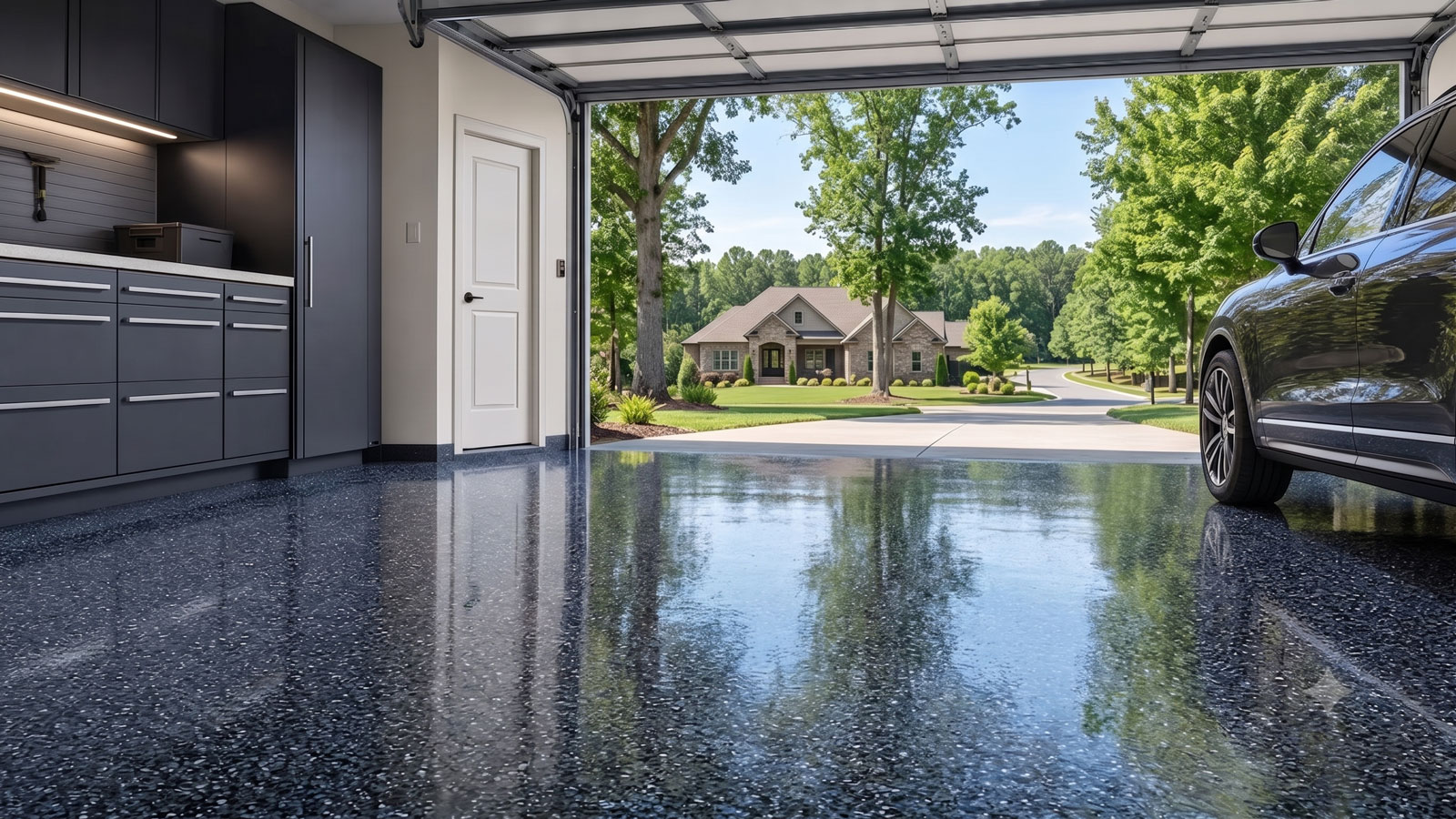
Garage Floor Coating in Plymouth, IN
Floor Coating Services in Plymouth, IN
Plymouth adopted an updated Stormwater Management Ordinance on July 14, 2025. Its rules cover runoff quantity and quality, illicit discharges and regulated development, with specified exemptions for some smaller residential projects. These municipal controls should not be confused with a diagnosis of garage concrete at an existing home. Actual slab conditions and driveway drainage still require inspection.
The ordinance identifies a one-acre land-disturbance threshold for certain construction-site stormwater provisions. Winter vehicle use is a separate issue: the nearby South Bend climate station has a normal annual snowfall of about 64.5 inches, although that figure is not a Plymouth-specific measurement. Water beneath wet tires is different from recurring runoff under a garage door or dampness that persists without vehicles.
For a Plymouth floor coating, ask about old paint, sealers, cracks, patches and grinding profile. An installer should check for genuine moisture concerns and repair requirements before proposing epoxy, polyaspartic or decorative flakes. Garage storage, finish traction and manufacturer-supported reopening time also matter. No coating system replaces correcting a recurring drainage problem.
Local Market Insight
Plymouth's stormwater ordinance was adopted July 14, 2025. It regulates runoff quality, quantity and pollution, includes a one-acre threshold for some construction runoff provisions, and exempts some smaller residential activities. This is development regulation—not evidence of trouble beneath existing private concrete.
What Affects the Cost of Garage Floor Coating in Plymouth?
For Plymouth, the actual concrete controls coating cost. Plymouth updated its stormwater management ordinance in July 2025. That public or geographic fact is context, not evidence of a damaged garage. A quote should identify old sealer, stains, repairs, joints and the specific preparation required.
Project access and finish also change price. Cabinets, steps and storage must be considered alongside flake texture, material layers and a realistic return-to-parking schedule. A written estimate should separate repairs from optional decorative upgrades.
- Prior floor treatments: Paint, sealer, epoxy, curing compounds and old patches may require removal or grinding. A home's age does not reliably establish the age of its garage slab.
- Plymouth's 2025 stormwater law: Plymouth enacted its updated municipal stormwater ordinance July 14, 2025. It sets standards for public and regulated development runoff, not specifications for residential garage-floor coatings.
- One-acre development trigger: Certain construction-site stormwater rules apply to land-disturbing work of one acre or more. A routine garage coating does not itself imply that such development regulations govern the project.
- Concrete repair: Movement joints, cracks, pitting and old repairs affect labor. A decorative coating cannot halt slab movement, and repair methods should be appropriate to the observed issue.
- Work-area access: Steps, cabinets, drains and bulky stored belongings make perimeter preparation more complex. Ask what must move so grinding and coating can reach every intended area.
- Topcoat and cure time: Decorative flake density, texture and cure needs change the schedule and materials. Clarify slip resistance, maintenance and when tires can safely return under product instructions.
Call for a clear, project-specific estimate — or request one online.
Plymouth's 2025 Stormwater Rules and Garage Doorway Water
Plymouth's council adopted an updated Stormwater Management Ordinance on July 14, 2025. The law addresses runoff quality and quantity, illicit discharges and post-construction management. It applies to specified development activity, not as a blanket requirement to install flooring treatments inside existing homes. A homeowner should separate public water-quality rules from real drainage observed at the garage.
The ordinance includes a one-acre disturbed-land threshold for certain construction runoff provisions and exemptions for some small residential developments. Those figures should not be misrepresented as measurements of private slab moisture. A driveway may be adequately drained even where regional stormwater planning is extensive, or it may have a threshold problem unrelated to the public system.
Inspect the garage opening after heavy rain. Check whether gutters discharge toward the apron, whether the door seal holds and whether wet areas persist on the slab when vehicles are absent. A coating can improve cleanup over sound concrete, but it cannot replace correcting active exterior runoff.
Where there is an older painted floor, look for delaminating material, stains, patches and movement joints. Mechanical preparation and repairs should be scoped on their merits before the homeowner selects an epoxy or polyaspartic finish.
Plymouth Winter Use and Choosing a Floor System
Northern Indiana winters make vehicle-tracked slush and gritty residue practical housekeeping issues. South Bend's NOAA-derived 1991–2020 normal is about 64.5 inches of snow annually, but that is a South Bend station reference rather than a Plymouth-specific figure. Actual use of a Plymouth garage is more informative than transferring regional snow totals without context.
A floor used for cars and utility storage may require work around steps, cabinets and the door threshold. Ask an installer to inspect old paint or sealer, cracks, pitting and previous repairs, then describe the grinding method and any necessary joint work. A house's construction date does not necessarily establish the garage slab's history.
After substrate evaluation, compare finish texture, decorative flake options, cleaning, cure conditions and return-to-vehicle timing. A complete written scope should explain how the chosen resin layers will bond, when the floor can handle tires and how winter residue should be removed.
- Identify current paint and resin finishes.
- Mark moving joints and old patch areas.
- Observe rainfall entry at the garage door.
- Distinguish wet-car puddles from slab dampness.
- Clear equipment for grinding and cure time.
- Get manufacturer-based reopening guidance.
Frequently Asked Questions
Will Plymouth's stormwater ordinance determine my coating?
No. The 2025 ordinance mainly regulates runoff and development activity, with different thresholds and exemptions. Garage-floor coating suitability depends on the actual slab, previous coatings and any observed water entry.
Can an existing Plymouth garage be coated?
Often, if the concrete is sound and suitable for resin after preparation. Old coatings, stains, patches and moisture concerns should be inspected. House age alone is not a useful suitability test.
What if water comes in through the garage door?
Check the door seal, gutters and driveway grade. Recurring runoff should be corrected before coating. Meltwater deposited by a parked vehicle differs from persistent wet concrete and may need different treatment.
Should I choose epoxy or polyaspartic in Plymouth?
Neither product is an automatic winner. The appropriate surface profile, coating layers, weather conditions, texture and curing schedule determine suitability. Compare the complete installation plan rather than the chemistry name alone.
What should a Plymouth coating estimate include?
Ask for grinding, old-coating removal, any repairs, joint handling, finish texture and cure time. Include access for cabinets and steps, temporary parking and maintenance requirements in the written scope.
Plymouth Neighborhoods & Local Context
Phone Quote Line
Speak with a local floor coating specialist about your project and get a realistic estimate range.
(574) 444-2773Typical Project Cost
$3,000–$5,500
Typical range for a standard two-car garage. Final pricing depends on floor size, concrete condition, prep work, coating type, and finish options.
Helpful Guides
Other Service Areas